In today’s modern construction world, “Sustainability” is no longer just a buzzword—it’s a mandatory requirement for each and every blueprint that’s drawn out by architects around the world. Every architect is in a constant quest to find a material that not only looks great and lasts long but also does justice to the concept of sustainability. However, at the pinnacle of this quest is Aluminum.
It may be a facade or a partition in a building, but the aluminum sliding doors have revolutionized the concept of sustainable living.
1.The ‘Green Metal’: Why Aluminum is a Truly Sustainable Resource
Aluminum is an environmentally friendly material that may be used in constructions across the globe. The advantage of using this material is that it may be recycled endlessly without compromising its durability; it does not deteriorate after recycling.
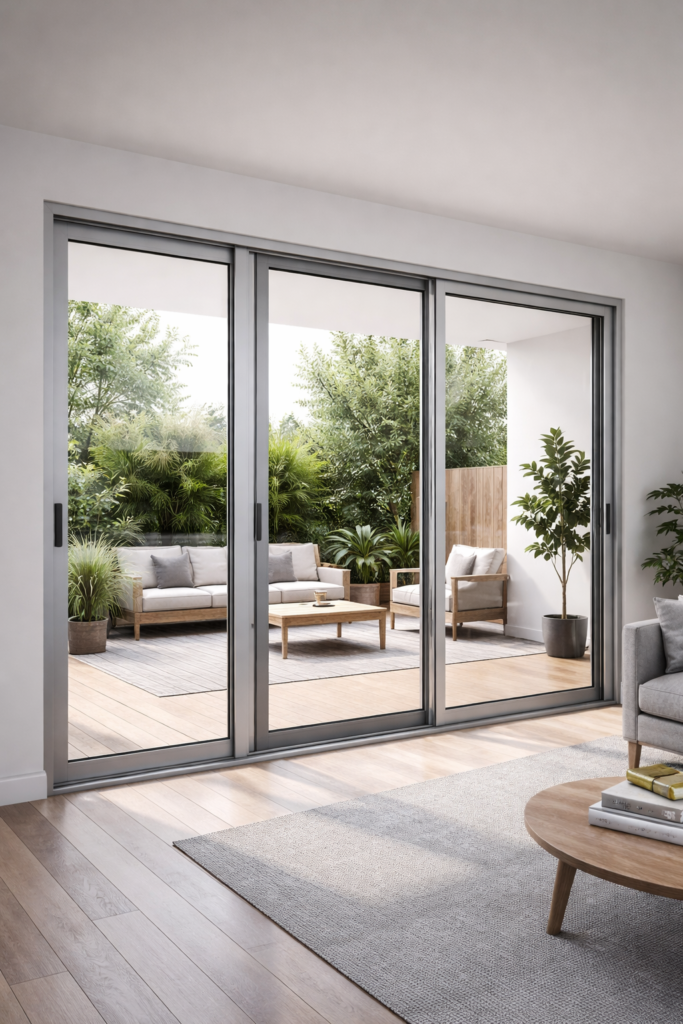
The use of aluminum sliding doors in the building constructed by the architect is an eco-friendly feature as it is a sustainable material. The modern aluminum sliding door is equipped with the latest technology in the form of thermal break technology. This technology reduces the flow of heat through the doors. This way, it maintains a constant temperature.
2. Versatility in Modern Sliding Door Design
One of the biggest advantages of aluminum is that it allows a versatility in sliding door design that other materials cannot match. This is due to aluminum’s inherent strength and light weight, which allow it to support large sections of glass with incredibly slim frames. This has led to several popular designs:
- The 3 Panel Slider: This is ideal for large architectural openings because it provides a grand entrance that allows for a high glass-to-frame ratio. This provides a wide view of the outside world while gliding smoothly on high-end tracks.
- Folding Sliding Doors: If you want to get rid of the separation between the living room and patio area, then there are folding sliding doors that are commonly called bi-folds. Aluminum’s high strength allows it to fold neatly to the side for a 100% unobstructed opening.
- Sliding Glass Doors: For those who want to make a statement, large-scale sliding glass doors create a ‘transparent wall’ effect that is the hallmark of luxury living. Aluminum allows this to function seamlessly, even at heights above 3 meters.
3. Aluminum vs. Traditional Materials: The Durability Fact
Another question that may arise is whether the use of a wooden sliding door is more natural. Though it is more classy and elegant to use a wooden sliding door, it does not rank very high in the race to sustainability. A wooden sliding door is more prone to warping, rotting, and even termites and hence requires more and more chemical treatment and replacement.
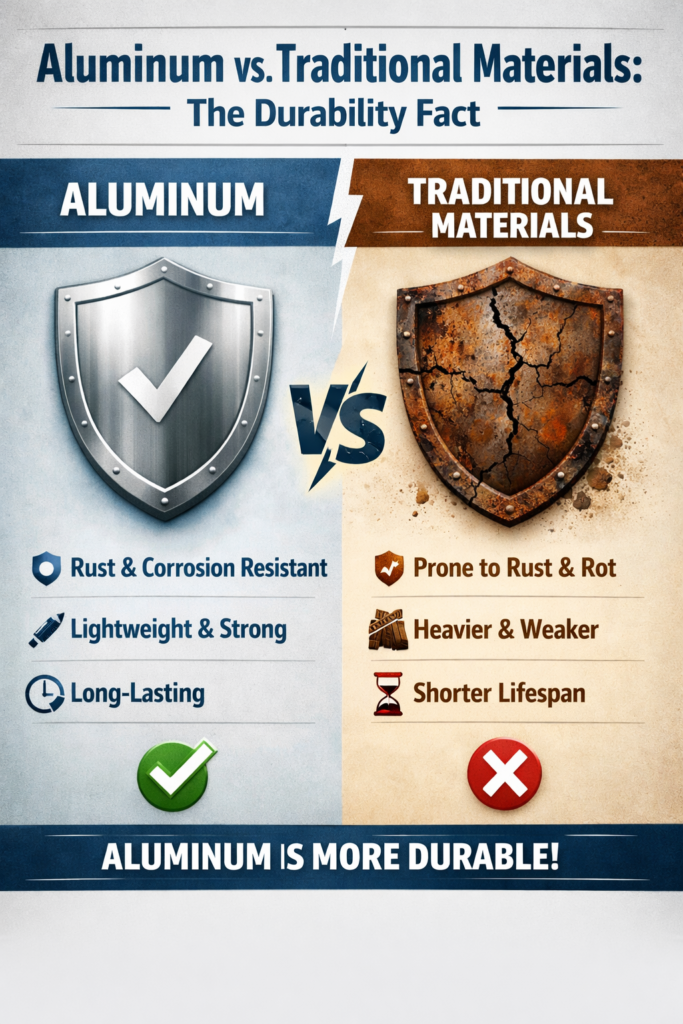
Unlike a wooden sliding door, an aluminum sliding door does not require any attention in weather conditions and does not rust, corrode, or expand in humidity. For all those architectural enthusiasts who still love wooden sliding doors, aluminum sliding doors may now be powder-coated to have a texture similar to that of a wooden sliding door.
4. Enhancing Human Comfort and Functionality
Sustainable design is not just about energy, but also about human comfort. In the case of aluminum systems, intelligent accessories are provided to make human lives more comfortable. These include the following:
- Balcony Sliding Door: In high-rise buildings, wind pressure acts on the door. The material that will be used in this case has to withstand this pressure. The ratio of strength to weight is highest in aluminum material and is therefore safest.
- Sliding Mesh Door: In the case of tropical countries, ventilation is a major requirement. The addition of a sliding mesh door will enable the residents of the country to open their doors and let the wind in while at the same time keeping the insects out.
- Sliding Door Closer: The major factor of energy efficiency is often lost through the doors of the house. The addition of a good quality sliding door closer will ensure that the doors are kept shut at all times, thus retaining the air within the house.
5. Beyond the Exterior: The Sliding Room Door
Aluminum technology application is not limited to just the exterior of a building. Architects are increasingly employing aluminum technology to make use of the sliding room door to achieve flexible and multi-functional rooms.
In modern architecture, there is a trend towards an ‘open-plan’ concept, wherein a sliding room door constructed out of aluminum can function as a wall. Whether it is a sliding room door between a home office and a kitchen, a slim aluminum profile ensures that this transition is seamless, taking zero swing space, which is essential in ‘zoning’ a house so that only those rooms being utilized are heated or cooled, a core tenet of energy-conscious living.
Conclusion: Framing a Greener Future
The Western Valley House project has shown the world that architecture is best when it is responding to the environment. Aluminium sliding doors are the primary tools that make this response possible. They provide the transparency that is required for biophilia, the strength that is required for modern safety, and the recyclability that is required for a healthy environment.
Whether you are looking for a 3 panel slider for your backyard or a sliding room door for your home, aluminum is the way to go for the future.